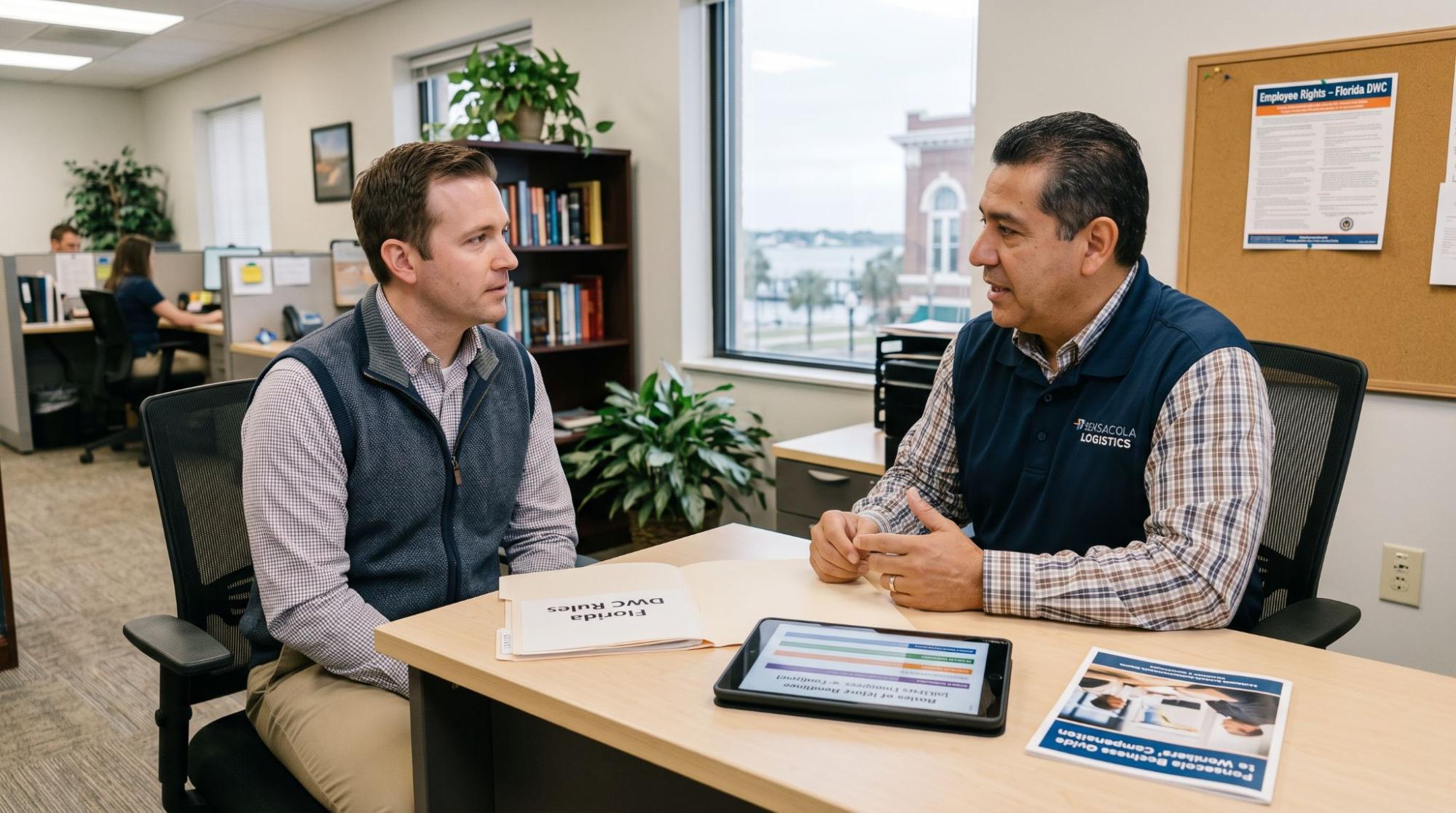
Finding workers compensation insurance Pensacola FL starts with knowing which state threshold applies. Construction businesses generally trigger coverage with one employee, while most non-construction employers trigger it at four. Agricultural employers follow separate employee count and work duration rules. Coverage is only part of compliance. AllStaff’s workers’ compensation services include payroll-based premium calculation, claims management, return-to-work coordination, hearing assistance, fraud investigation support, and safety education.
Who Needs Workers’ Compensation Insurance in Florida?
Florida coverage requirements depend on the employer’s industry, number of employees, entity organization, owner exemptions, and where the work is performed. The table below summarizes the general thresholds.
| Florida Employer Type | General Coverage Threshold |
| Construction | One or more employees, including nonexempt corporate officers or LLC members |
| Non-construction | Four or more employees, including nonexempt corporate officers or LLC members |
| Agriculture | Six regular employees and/or twelve seasonal employees meeting Florida’s work-duration rules |
| State and local government | Coverage is required |
| Out-of-state employer working in Florida | Florida coverage or qualifying reciprocal coverage may be required |
Employers should verify their classification and current requirements with the Florida Division of Workers’ Compensation before assuming their business fits any single category.
Construction Employers
A Florida construction employer generally needs workers’ compensation coverage when it has one or more employees. Nonexempt business owners who are corporate officers or LLC members can count as employees. Florida defines construction trades through its administrative rules, so a business should not assume it is non-construction based only on its company name or marketing description.
Non-Construction Employers
A non-construction employer generally needs coverage with four or more employees. Full-time and part-time employees count, along with nonexempt corporate officers and LLC members. Do not assume that family members, temporary workers, or owners never count toward the threshold; status should be confirmed under Florida rules.
Agricultural Employers
Florida applies separate agricultural thresholds. Coverage may be required when an agricultural employer has six regular employees or twelve seasonal employees who meet the applicable duration criteria. Verify the current seasonal-work calculation with the Florida Division before relying on a general summary.
Out-of-State Employers and Remote Work
An employer sending workers into Florida should notify its insurance carrier and confirm whether Florida is listed correctly on the policy. Reciprocal coverage may apply in limited temporary situations, but employers should not assume an out-of-state policy automatically satisfies Florida law.
Do Owners and LLC Members Count as Employees?

Nonexempt corporate officers and LLC members can count toward the applicable threshold. Sole proprietors and partners may be treated differently depending on the industry and whether they elect coverage. Forming an LLC does not automatically remove an owner from workers’ compensation requirements.
How Florida Workers’ Compensation Exemptions Work
Eligible corporate officers and LLC members may apply for an exemption through the Florida Division of Workers’ Compensation. An exemption applies to the approved individual, not the entire business. An exempt individual is excluded from statutory employee status and generally cannot receive workers’ compensation benefits through that exemption.
Single-Member LLC Considerations
A single-member LLC owner should confirm whether the business is construction or non-construction, whether the member counts toward the threshold, and whether the owner qualifies for and has obtained a valid exemption. Single-member status does not create an automatic exemption.
What Florida Workers’ Compensation May Cover
Benefits depend on Florida law, the facts of the injury, medical findings, work-relatedness, policy terms, and claim determination. Coverage may apply to a reported incident, but every case is evaluated on its own facts.
Authorized Medical Care
Medically necessary treatment authorized through the workers’ compensation system may include emergency treatment, doctor visits, hospitalization, prescriptions, therapy, and medical equipment. Follow-up care generally must be authorized by the insurance carrier.
Wage-Replacement and Disability Benefits
Eligible workers may receive partial wage-replacement benefits when a qualifying condition prevents them from working or restricts their duties. Benefit rates, waiting periods, duration, and maximums are controlled by Florida law and individual claim circumstances.
Reemployment and Return-to-Work Services
Temporary modified duty, documented medical restrictions, vocational assistance, retraining when eligible, and coordination among the employer, employee, medical provider, and claims representative all factor into a return-to-work plan. That plan must match the employee’s documented restrictions.
Death and Survivor Benefits
Eligible dependents may receive benefits after a qualifying work-related death. Certain funeral and educational benefits may also apply. Check with the Florida Division for current limits and eligibility criteria rather than relying on changeable dollar amounts published elsewhere.
What Happens if a Florida Employer Has No Coverage?
The Florida Division of Workers’ Compensation’s Bureau of Compliance can investigate employers and issue stop-work orders when required coverage is missing. A stop-work order can prevent the business from operating until it complies with state requirements and satisfies the applicable reinstatement process.
Penalties for Noncompliance
Florida may assess a penalty equal to two times the manual premium the employer would have paid during the applicable preceding twelve-month or twenty-four-month period. The Division determines the applicable period and assessment from payroll, classifications, and other records, so the calculation is rarely straightforward.
Other Conduct That Can Trigger Enforcement
A stop-work order may also be issued when an employer understates or conceals payroll, misrepresents employee duties, or otherwise attempts to avoid paying the correct premium. Accurate payroll and worker classifications are central to both coverage and premium compliance.
Financial Exposure After an Uninsured Injury
An uninsured employer may face substantial medical, wage, legal, and administrative exposure after a work-related injury. Not every cost automatically becomes the owner’s personal liability; the outcome depends on entity structure, state law, enforcement, and the facts of the case.
How Is a Florida Workers’ Comp Premium Calculated?
The basic calculation, stated in plain language, is: Estimated Premium equals Payroll by Classification divided by 100, multiplied by the Approved Classification Rate. The final premium may also reflect experience modification, schedule adjustments, carrier factors, policy minimums, assessments, credits, audits, and other approved components.
Employee Classifications
Each classification reflects the work employees actually perform and the expected risk associated with that occupation or industry. Office staff and field employees may have different classifications, and misclassification can produce incorrect premiums, audit adjustments, and compliance concerns.
Payroll and Premium Audits
Traditional policies commonly begin with estimated payroll and reconcile premiums after the policy period using actual payroll and classifications. Employers should retain payroll registers, overtime records, job descriptions, subcontractor certificates, and ownership information needed for review.
Experience Modification
Qualifying employers may receive an experience modification factor based on how their actual losses compare with expected losses for similar classified businesses. An experience modification can raise or lower the manual premium, so business owners should review the worksheet and dispute factual errors promptly.
Pay-As-You-Go Workers’ Compensation
Pay-as-you-go arrangements calculate premiums using current payroll information throughout the policy period. This structure may reduce large upfront payments and align premium installments more closely with actual payroll. It does not remove audits, minimum premiums, policy conditions, or potential adjustments unless the policy explicitly says so.
How Pensacola Employers Can Manage Workers’ Comp Costs
No single action guarantees a specific premium reduction, but the following practices support accurate coverage and fewer surprises at audit time.
Use Accurate Payroll and Classifications
Review employee duties, work locations, owner status, overtime treatment, and payroll allocations. Notify the appropriate insurance or payroll contact when job responsibilities change.
Report Injuries Promptly
Create a written reporting procedure and train employees and supervisors to use it. Early reporting supports timely medical coordination, fact gathering, claims communication, and corrective safety action.
Establish a Return-to-Work Process
Identify meaningful modified-duty tasks before an injury occurs. Review every assignment against current medical restrictions and document changes as they happen.
Consider a Qualified Workplace Safety Program
Florida provides resources for qualifying workplace safety programs and may offer premium-credit opportunities when current requirements are satisfied. Verify eligibility, certification, and carrier requirements before expecting a credit.
Review Drug-Free Workplace Requirements Carefully
A qualifying Florida drug-free workplace program may be eligible for a premium credit. The program must follow statutory and regulatory requirements, so employers should not begin testing or describe themselves as certified without reviewing the complete legal process.
What to Do When an Employee Is Injured
Address immediate medical needs and call emergency services when necessary. Document the date, time, location, witnesses, and work being performed. Follow the approved medical and claim-reporting procedure, and notify the carrier or workers’ compensation contact promptly. Complete required employer forms, review OSHA reporting and recordkeeping obligations separately, and preserve relevant records, video, equipment, and witness information. Maintain appropriate employee communication and coordinate modified duty based on medical restrictions.
For existing clients, AllStaff’s workers’ compensation claim instructions and employer forms and safety resources outline the specific steps to follow after an injury.
How AllStaff Supports Pensacola Employers

AllStaff offers pay-as-you-go workers’ compensation administration tied to payroll, claims management and processing, hearing preparation and assistance, return-to-work coordination, investigation support, and safety education. The insurance carrier issues the policy and determines coverage under its terms; AllStaff supports administration and communication within the agreed service arrangement.
Questions to Bring to a Coverage Review
Before your next coverage review, gather your employee count, owner and officer information, work locations, detailed job descriptions, current classifications, annual payroll by classification, subcontractor information, claims history, existing safety programs, and current policy and audit documents.
Frequently Asked Questions About Florida Workers’ Comp
How many employees before I need workers’ comp in Florida?
Florida construction employers generally need coverage with one or more employees. Most non-construction employers need coverage with four or more employees. Agricultural employers follow separate thresholds involving regular and seasonal workers. Nonexempt corporate officers and LLC members may count, so employers should verify their industry, entity structure, and exemptions.
Is workers’ comp required for a single-member LLC in Florida?
Not automatically in every situation. A single-member LLC owner’s treatment depends on the industry, whether the member counts as an employee, whether other employees work for the business, and whether the owner has a valid individual exemption. Construction and non-construction businesses follow different thresholds and exemption rules.
What happens if I don’t carry workers’ comp insurance?
Florida can issue a stop-work order that prevents the business from operating until it complies with coverage and reinstatement requirements. The state may also assess a penalty based on twice the manual premium that should have been paid during the applicable period. An uninsured injury can create additional financial exposure.
How is my workers’ comp premium calculated?
Workers’ compensation premium generally begins with payroll assigned to employee classifications and the approved rate for each classification. Experience modification, claims history, policy minimums, state assessments, carrier adjustments, credits, and audits may affect the final amount. Accurate payroll, job descriptions, classifications, and ownership information are essential.
Can AllStaff Payroll help lower my workers’ comp costs?
AllStaff can support accurate payroll-based premium calculations, claims management, return-to-work coordination, safety education, and pay-as-you-go administration. These services may help employers manage cash flow and avoid preventable discrepancies, but AllStaff cannot guarantee a lower premium. The carrier, rating rules, payroll, classifications, claims, and policy terms determine cost.
Do Florida contractors need proof of subcontractor coverage?
Florida contractors must confirm that subcontractors have required workers’ compensation coverage before work begins. If a subcontractor lacks proper coverage, its workers may create coverage and premium exposure for the contractor. Obtain valid certificates, verify current coverage, retain documentation, and review Florida’s contractor requirements before allowing work onsite.
Questions about your threshold or premium? Get in touch.
Florida Compliance Can Be Manageable
Florida workers’ compensation compliance begins with the correct industry threshold, employee count, owner status, payroll, and worker classifications. From there, consistent injury reporting, accurate records, safety training, claims coordination, and return-to-work planning help keep the program organized. Still comparing service models? Read PEO vs. payroll service for Pensacola businesses. To review your current setup and discuss payroll-based workers’ compensation support, contact AllStaff Payroll Services with your employee count, industry, payroll, job duties, and current coverage information.